Dear Moviegoers,
Not in a million years would many of us have believed that more videos of police brutality, especially on black men and women, decades after Rodney King's beating on VHS, would be able to create any kind of cultural stir, considering the volume of media noise that's created every single day now. By this, I mean to describe a desensitized existence that would be indifferent to feeling anything for or speaking out about state-endorsed tragedies. The mass media machine had won, making much of us zombies of sorts, was the narrative sold to us, and one that I bought into.
I'd like a refund, please.
Films that cover social injustices sometimes come with a falsehood of what appears to some as being pre-packaged "hope-sploitation" by virtue of theme. Admittedly, judging a book by its cover or an article by its headline is a wrongheaded but often guilty-as-charged habit, and one that this critic must try to conquer more often. After all, pressing play or screening something, anything, can level a surprise before your eyes. Or just a good movie, like #WhileBlack.
The title being a hashtag is a worthy provocation toward institutions and platforms looking to control black citizen storytelling and documentation. However, this is far from being a poke or a punch to the system. It's the truth, straight up and hard to put down. And indeed, the videos of what happened to Philando Castile and George Floyd were and are still difficult to watch, turn off, and engage with.
"Engage with." It's true, people hitting like buttons, heart emojis, thumbs downs, etc has become a too truncated and poor example of conversation about sensitive but must-discuss topics. Whether on purpose or not, platforms like Facebook have morphed communication into easy-to-understand bytes and easier to monetize "content." And what gets lost in the shuffle are those who made the media in the first place, and those harmed within. From black culture to black pain, it all becomes products to be commercialized.
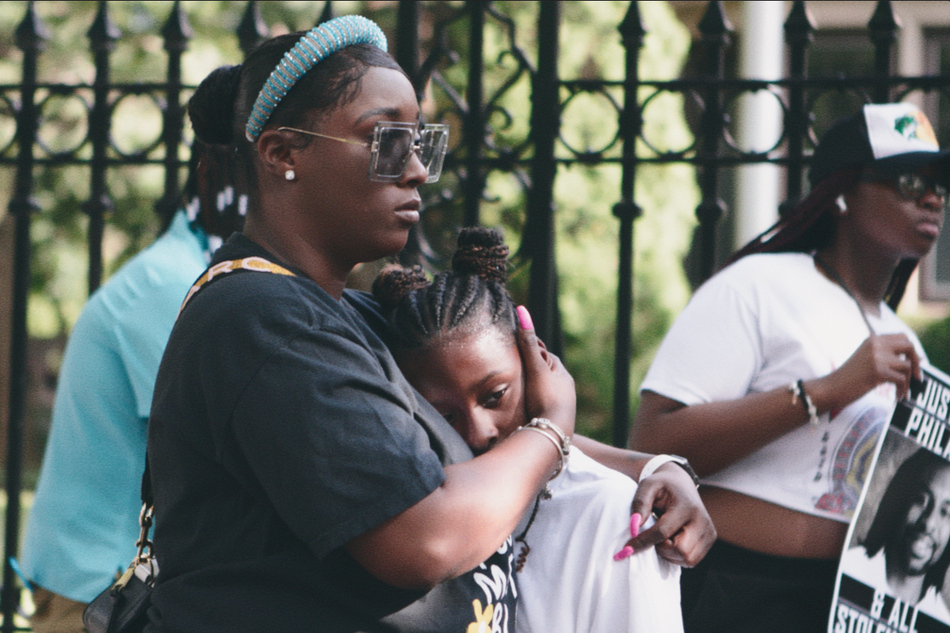
#WhileBlack focuses almost entirely on the black women at the heart of Philando and Floyd's murders by police, Diamond Reynolds and Darnella Frazier, respectively. Not just having to wear the trauma of bearing witness to horror and the unbearable (but heroic) responsibility of documenting it, their lives were forever changed by the sheer reach of their uploads, forcing their families to uproot and move, losing out on school and growing up, and more than any one person should have to handle.
To this movie's immense credit, it never exploits these stories or uses either of the two women as tools or stepping stones for something "bigger than us." #WhileBlack naturally stays grounded and Earth-footed, right alongside Diamond and Darnella as THEY tell THEIR OWN stories, with only mild and appropriate contrasting and juxtaposition here and there. This kind of thoughtfulness is often missed in similar documentaries, usually the ones that lack a certain discipline or general and genuine manners.
Careful but loud, assertive not aggressive, the film is rapturous. It has the kind of honor and truth that many elected (and un-elected) officials claim to have but never will. And, on a most personal note, #WhileBlack gave this critic things to always keep in mind: people hold cameras, people watch recordings, and people's hearts beat. Still. Even nowadays. For all days. 4/5
#WhileBlack is coming to the 25th SF Documentary Festival. Click on the banner below for more information.