Dear Moviegoers,
Somewhere before the middle of the independent drama Watching Mr. Pearson, I, as both a critic and a moviegoer, was left aghast at the conclusion of a scene. Despite having under an hour or so of viewing left, my sensibilities had possibly reached a peak of astonishment and amazement that I feared wouldn't be sustained by the remainder of the film. A small cast, a single setting, a simple premise, and already the standout scene has happened. What goes up must come down.
Finally, Isaac Newton is proven wrong.
One of the best features of the year, Watching Mr. Pearson might be described by some as a "surprise" of sorts. For sure, this is not a movie with familiar names. However, in all humility, audiences will feel as though they've known this world and these people forever. That's as close to a guarantee as I can ever give for something that I didn't find "surprising," but instead "fulfilling."
Allow me to assure those reading and those I encourage to buy a ticket that the movie, by no means, flies over anyone's head or looks down from a perch. Never does the talent or the crew overdo their skills, chew the scenery, or wear out any welcomes. Watching Mr. Pearson IS an easy projection that can and should be seen by anyone.
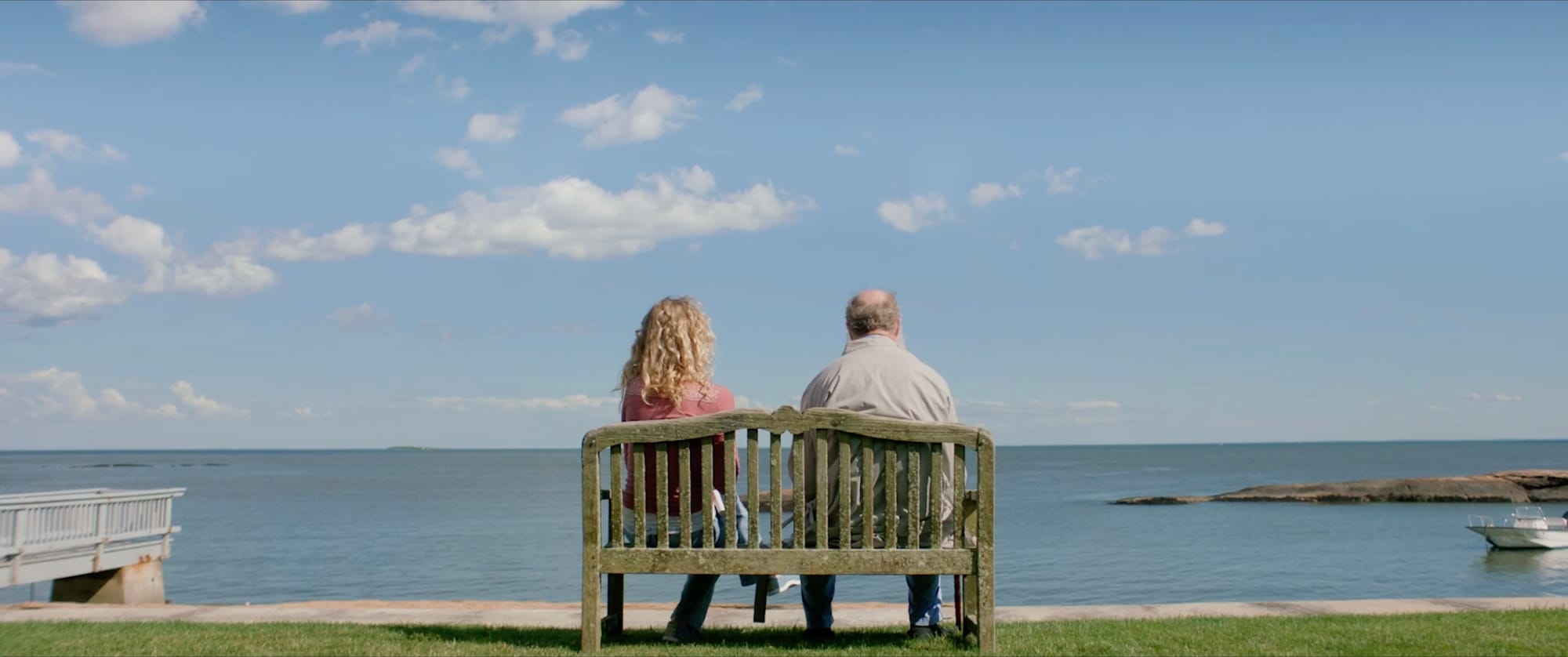
It's about an old movie star who, while possibly sundowning in his mansion, has two caretakers looking after him. Posters of his prime adorn the walls like sadly placed mirrors or, for visitors, windows into a parade that has long gone by. They're pretty designs with big words and bigger faces, contrasted with the reality of the man's current state - or role - of an aged man who can barely walk.
Played by Hugo Armstrong as heavy and withered but never weak, the titular Mr. Pearson is an actor's actor of a different Hollywood. He was a professional, he was a stud, and he understood how much movies matter to people, taking on that responsibility with conviction and reverence.
The scene in question at the top of this review works as if it were written, directed, and acted like the grand thesis of its main character's place in life, both in that of others and his own. And there are many more scenes that, individually and collectively, could be plucked from the movie and used as examples of everyone else's persona and virtue, almost as if watching this is akin to a judgment day event. This is my flippant way of saying that Watching Mr. Pearson could well be a dramatic masterpiece.
That scene, finally, happens around a game of pool, where Pearson plays out a scene from a movie of his - about a pool player - but here he's left alone, until a vision of his prime self from that movie comes in. The two knock around and do the business of one-upping each other, while using lines from the film they're acting out to argue one's diminished worth at the end of life. Nothing is seemingly resolved, but everything we need to know gets spelled out with the tools of cinema long past.
Don't go with Watching Mr. Pearson thinking that it's a single-acting showcase for Armstrong (though it is a showcase), and don't go with it thinking that the time spent will be for the tears only. This is a movie of surprises, honesty, and accolades. It's a film made by and for the moviegoing romantics, and that's a value that can only rise with time. Rise, and never fall.
Never.
5/5
Watching Mr. Pearson is currently playing in limited release. It screens in New Orleans on May 16th and 17th at Zeitgeist Theatre & Lounge, presented by the filmmaker.