'Backrooms' and 'The Travel Companion' | When Spaces and Places Manifest Discomfort and Delusion
Lifestyles of the cine, the erratic, and the perplexed.

Dear Moviegoers,
They both kicked off with question & answer (Q&A) sessions. In intimate rooms, hearing the same redundancies, and responding with equal if ego-driven gusto. It's all for their benefit, but opportunities give way to self-sabotage. Quickly. And thus, horror of their own making.
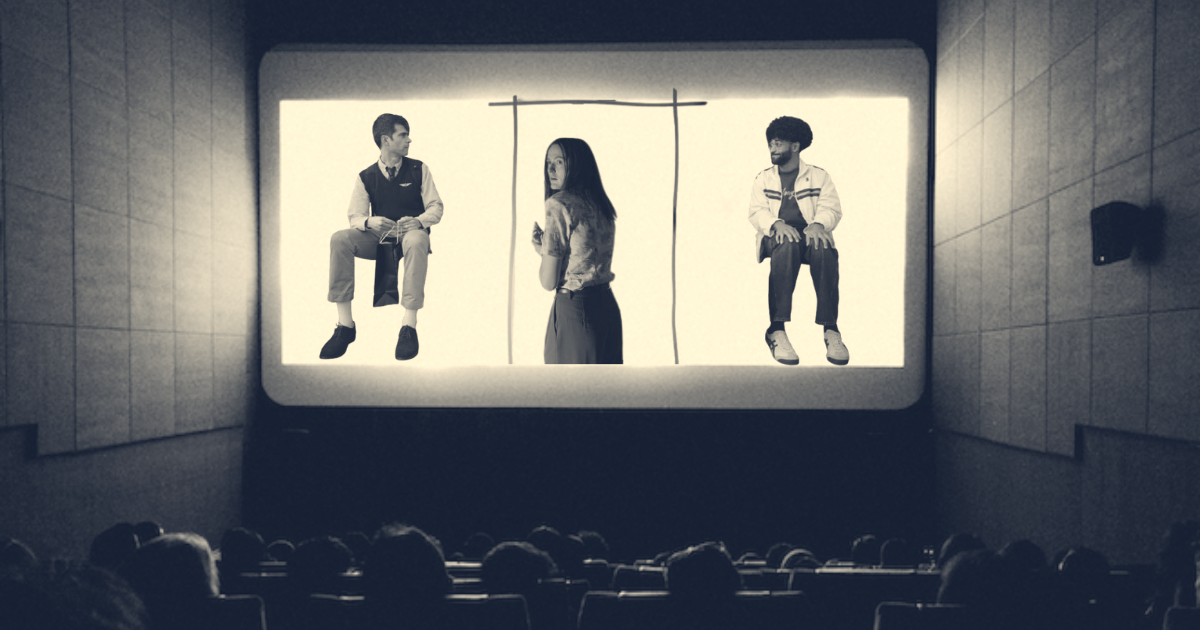
These two recently released films, Backrooms and The Travel Companion, both independent productions, share grand expressions of self-absorbed and insulated lead characters, whose individual fates could be seen in either happy or sad endings, give or take the audience's interpretation. The movies came back-to-back for me, and serendipitously, were threaded together similarly in how uncomfortable and awkward they became, the more they went further inward.
One gave me the creeps, the other some second-hand embarrassment.
Near-perfect cinema, I say.

First-time feature film director Kane Parsons, who has adapted his YouTube series from one world's stage to another, has almost outdone Lars von Trier's Depression Trilogy (Antichrist, Melancholia, Nymphomaniac) with a display of how psychiatry needs exposure therapy to reach answers that patients already knew. Backrooms is no backhanded move against modern mental healthcare, mind you, or even a full criticism. It works as a jumping-off point for mysterious interdimensional spaces to be found, explored, and lived in. It works as an exercise in discomfort, where confrontation is had against a large void, bouncing back onto the self.
In this way, Backrooms is brilliant in concept. Where the web series was more about lore and theory, the movie dives headfirst into a crafting of corners, or rather, places within that can be escaped into and held onto for a semblance of comfort. However, as the story progresses, things become clear that it's much less about the setting and more a story about characters. About the patient and therapist. About their hangups and their responses in a disorienting world. A world that is a heightened reflection of their own spaces and places in "reality."
In this way, Backrooms lives as a personal favorite film of 2026.
Lives, because cinema is indeed alive. By hook and by crook, movies are breathing things, with minds for expression or cravings for thought. The living vs. the undead. Art vs. zombies. Kane Parsons, at his very young age, seems to understand this better than more seasoned filmmakers who have begun embracing new yet very problematic technologies. Is Backrooms a revelatory reminder of true form cinematic possibility?
It could be.
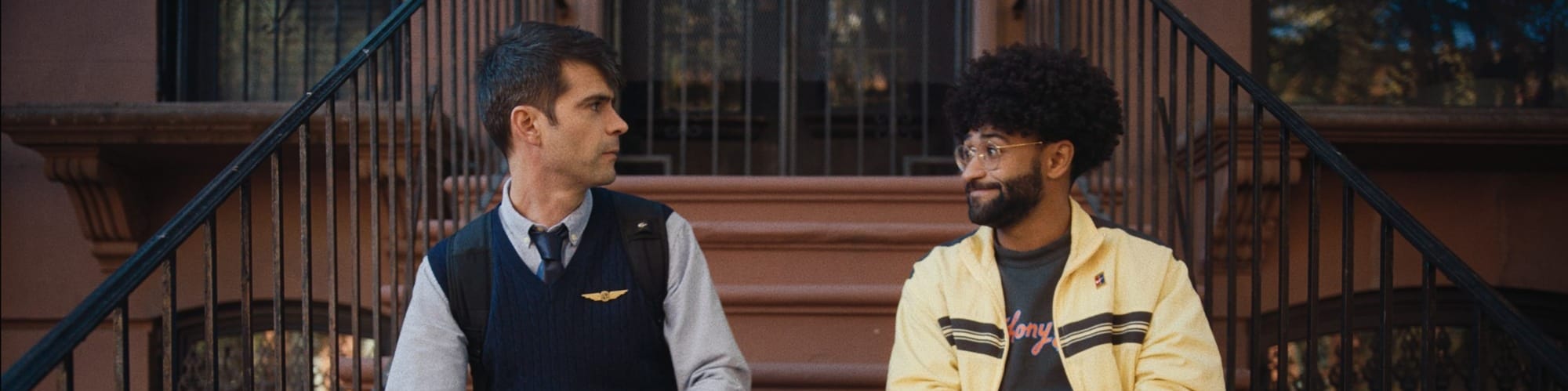
Truer to cinematic form is the space of the film festival circuit, where up-and-coming filmmakers could potentially sell their projects to eager distributors, and, at the very least, be seen and enjoyed by appreciative moviegoers. The Travel Companion begins in a lineup of familiar indie filmmakers (I spotted Joanna Arnow), answering all too familiar questions, stale as can be, from pseudo-intellectuals trying to impress.
That single scene is the setup to the rest of the movie, where a would-be documentarian, in a creative rut, clings desperately to his roommate's job perks of free travel, to wander around and tell people his unrealized and unformed ideas. Pathetic in nature and self-humiliated by design, Tristan Turner's performance as Simon is a one-stop shop of arrested development in motion. He's committed, and he's absolute in a surprisingly memorable role.
Also surprising is the standout cinematography, beautifully captured by Jason Chiu, who sees New York and its denizens as a place for growth and boundless exhibition. Of course, Simon clashes with those elements so strongly that his very essence could make stray dogs roll their eyes.
Existing on the opposing genre plane of Backrooms, The Travel Companion is a cute comedy in the same breath as Frances Ha. Adult children trying to get by with a little help from their friends and a lot of assistance from their own lack of charm.
Both Backrooms and The Travel Companion are about spaces and places that feel infinite but are ultimately smaller than initially understood. I'm not sure which is scarier, as both are plausible nightmares in different ways. The corners where comfort struggles to work on its leads (both black men, for another thread) shrink in size the closer their own literal or figurative therapists (or shrinks) come. However painful and exhausting, confrontation and exposure must work as last resorts for these individuals.
The two movies have endings that can be seen as glass half full or empty, as happy or sad, depending on each viewer to decide. At least, that's how I understood them.
I say, near-perfect cinema.
Backrooms (5/5) is screening everywhere.
The Travel Companion (4/5) is currently playing in limited theatrical release.
Future reviews might be posted directly to the blog without email delivery, but will be linked to in other newsletter installments. If you'd like to leave a comment, sign in to the blog on a browser (mobile, desktop, etc) if you're a member. If you'd rather reply via email, hit me up at binxmoviegoer@duck.com.
In case you missed it, I covered some selections from the SF DocFest this year. With your permission, feel free to peruse:
 Bill Arceneaux
I appreciate y'all being readers and fellow moviegoers! If you've been waiting to sign up for a membership or upgrade a current one, do so at your convenience - some good exclusives are on the way.
Coming soon:
The Bride!
Disclosure Day
Interactive Cinema
Catching up on Overlook 2026
and more