'Jamarcus Rose & Da Five Bullet Holes' Review: Could've Used More Baseball
Sorry, but this game was too close to call.

Dear Moviegoers,
Filmmaker Marcellus Cox, whose film Liquor Bank I previously reviewed, tends to make movies that follow a similar thread: the day-to-day struggle to overcome trauma from within the black community. To tell this kind of drama in one's own voice must be difficult for anyone to accomplish, but more so if you're a director of color, as these movies do come with racial stigmas attached - intended or not. Cox makes drama in the way that documentaries hope to capture honesty. His films aren't necessarily Werner Herzog's vision of "ecstatic truth," shooting instead to find the reality in fiction.
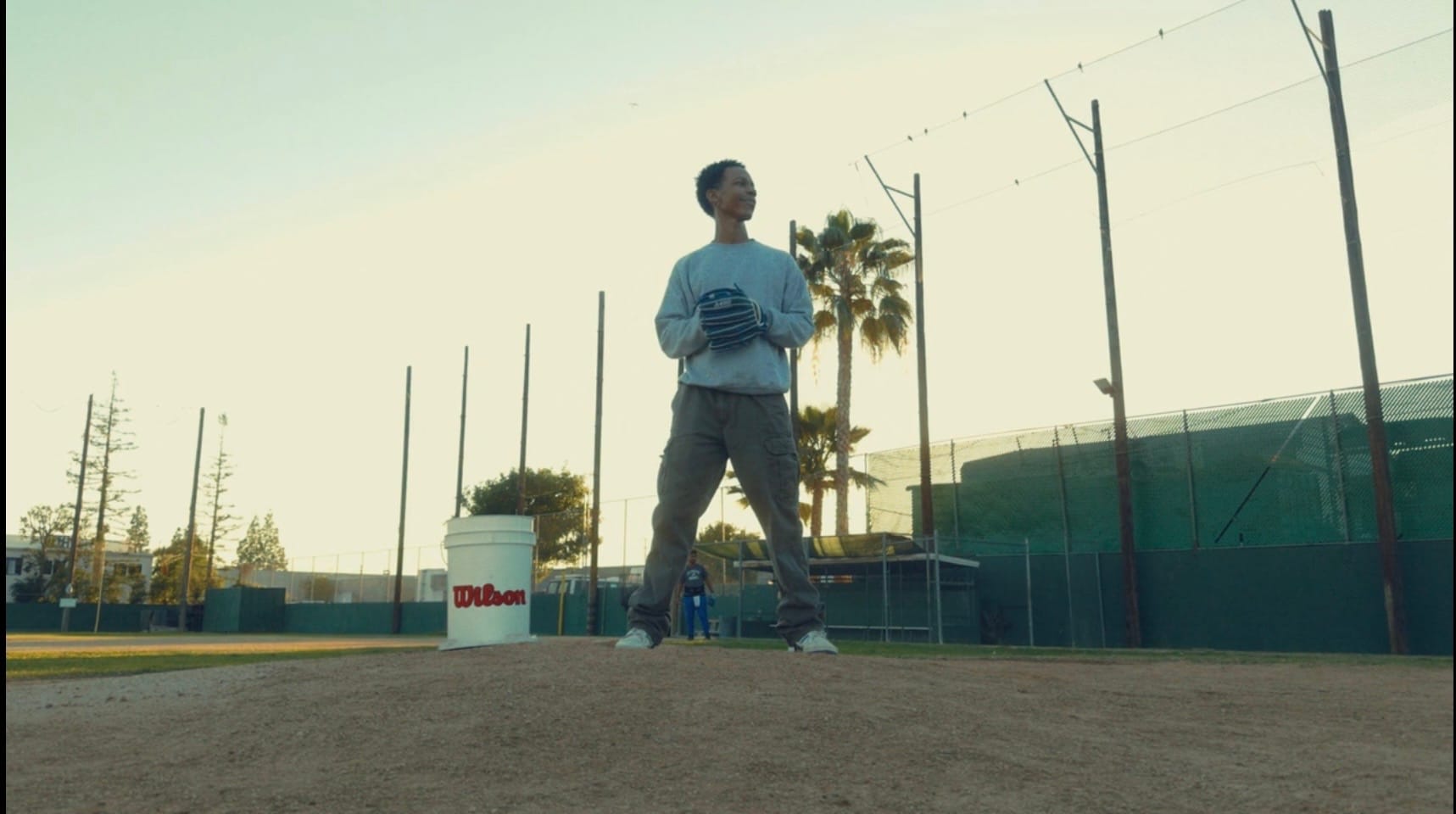
His latest, Jamarcus Rose and Da Five Bullet Holes, is no exception. Taking place over the course of an afternoon and evening in and around a neighborhood park, the film is about a young man who connects with his mentor from the Big Brother program, using the game of baseball to strike up conversation about past pain and future prospects.
The visual of pitching and catching between a young man and a grown-up, in the midst of a simple back-and-forth on maturity, makes for an intriguing dynamic that suggests the paths of both individuals. Where one is going, and where one is at right now.
While director Marcellus Cox continues to impress, Jamarcus Rose isn't without some criticism. The actor who plays Jamarcus looks a bit older than the character is suggested to be (though his age is never clearly stated), which threw me for a loop. He's good in the role (Duane Ervin), but there was built-in confusion from the beginning.
The screenplay features speeches that don't do the actors too well, playing into old and unsteady genre mainstays. Jamarcus's grandmother, for example, talks at length about keeping him off the streets, making her own point multiple times. This too is confusing and frustrating, as Jamarcus seems well adjusted already.
Not to say that a Big Brother isn't a good idea.
I won't spoil anything, but there is a twist at the late climax that was telegraphed from the first time Jamarcus and his Big Brother play ball. There is tension, there is mystery, and it's all at a storytelling crossroads, not unlike Jamarcus himself, kind of. What happens sprouts out shockingly, straight from the ether, only having been set up as a dramatic maybe rather than as an inevitability. Was it forced? Was it needed?
A movie like Jamarcus Rose and Da Five Bullet Holes could've used something more profound to end things with, something that speaks true to the relationships between experienced black men teaching and building up younger ones to reach their goals, whatever they may have. Instead, the film pushed more for honesty in another direction, one that is more indulgent than expected.
Trauma and pain are ultimately seen here as part of a locked chain that can barely be pried open, and not as a problem that family and community can help solve. And yet, this is a film of conversation and, at the very least, is one that's very much worth having. No matter how I feel about it on its own, Jamarcus Rose and Da Five Bullet Holes has space to grow. And, in that space, many possibilities can exist. 2.5/5
Jamarcus Rose and Da Five Bullet Holes is currently on a theatrical run.