People with Disabilities Were Always the First of Many More
'Disposable Humanity' posits the importance of research and remembrance.
Dear Moviegoers,
It started with an idea, as things always do. It was printed in ink, then sealed in an envelope as a legal document. It was executed as trial by order, as an experiment for a larger project. It was buried and nearly lost to horror and history.
Now, it's being exposed.
Disposable Humanity isn't so much a documentary in my mind - in a traditional sense - but rather a chamber piece on shrouds of mystery, the duty of discovery, and the lives of people who were considered "expendable" and "not worth living." We all know, even in the broadest of strokes, most of the events of the Holocaust as permitted and committed by the Nazis, but the origins of this large-scale mass murder, from the bureaucratic to the logistical, were first tried on a population of people with disabilities, the majority of whom were living in institutions and hospitals.
Already shunned and sheltered away from some of their families, this group was considered easy prey for practice and exploitation, at least by those in the most monstrous of thought and authority. Doctors and medical personnel were asked and ordered to participate in testing methods of collective euthanasia for the mere purpose of eradication, and plenty of them went along with it. But what of those who call for it to stop? Is there legal room to conduct the operation? And what about the public?
Almost as if by cruel serendipity, Disposable Humanity connects the dots from Nazi Germany to the present, without ever having to make mention of or even name anyone specifically. I'm not suggesting exact behavior or projects, but rather that the corrupt, legally thin arguments used for doing harm in various ways are shockingly similar. For Hitler, it was signing a mere memo. For others, it's even easier. But it's of no consequence, as the film is focused purely on the people with disabilities who've been lost to such grim, never-should-have-been fates, on the researchers who continue to carry out their work, and the artists who do their best to keep history alive.
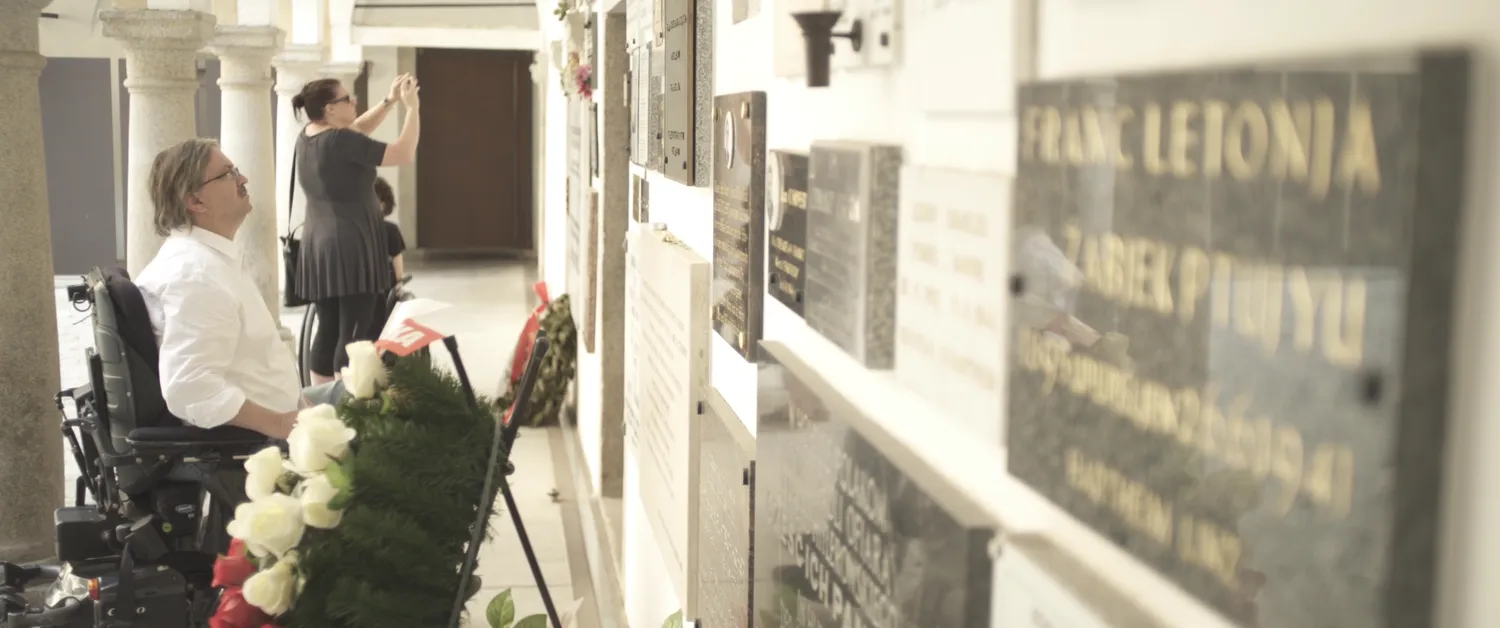
As someone from a family of advocates, I was particularly struck by the warmth of the movie's investigation through Europe, into the cold nature of industrial death. This warmth comes from everyone on and behind the camera, from the interviewed curators to the inquisitive filmmakers, who find themselves traversing sites of euthanasia and memorial throughout the region. Some are places easily accessible; others not so much. But every place holds an emotional punch that will never stop taking our breath away.
For Disposable Humanity, the facts lay bare the informational extent, but the film tries to tie it all together with the human factor, and is most successful, despite the challenges of time gone by. They visit the old gas chamber rooms in still-operational institutions that also hold small but impactful memorials in parts of hidden-away hallways. Near-inaccessible on purpose? Probably not. Probably just done with wistful ignorance. Without people in mind.
And that's how it all was made possible. How the Holocaust was born. How you get away with killing lots of people. Choose those of secondary or third class, of little to no consideration, and don't ask questions.
It started with an idea, printed in ink, sealed in an envelope, passed around as a legal document, and executed with the efficiency of a Fanta soda plant.
And now, it's exposed. By people. With cameras, with will, and with hearts. Wheels and all. 5/5
For more information on this film, please visit its official website.